Engagement Process: from the inspection report to switch-on
A solar decision runs in a fixed order, and most of the trouble comes from doing its stages out of sequence. Each stage is easier to judge once the one before it has been settled.
The order matters because each stage depends on the one before it. A proposal drawn before the report has been read may be designed around a roof that cannot carry the load, and a contract signed before the electrical findings are settled can commit a household to work that the panel itself rules out. We set out the ordinary sequence here in general terms, so a reader can see where they stand and what should come next. It is not a calendar, and no timelines or fees are given, because approvals and prices depend on the state, the utility and the provider. Read the stages as a set rather than as a menu, since skipping one usually moves its problem to a later and more expensive point. The sections that follow describe each part of the sequence in the order it normally happens.
The six stages of a solar decision, in order
The first stage is the report itself. Read the roof, electrical and structural sections before any solar proposal, and mark every finding that touches the places where panels would go. The second stage sorts those findings into two groups: the items that must be fixed before any array can be fitted, and the items that can be planned around. The third stage is to set a rooftop proposal beside a community subscription, if one is open to the reader, and to look at what each one asks of the household across its whole term. A proposal that has not been checked against the report is only a plan for the roof, not a plan for the whole home. Keep the report open while you read, because each finding needs a place in the sequence before it can be weighed.
The fourth stage is the agreement, which is where most of the terms that matter are written. Read it for what happens if the home is sold, if the household moves, or if the roof needs repair while the system is in place. Ask for the agreement in writing before the crew is booked, because a verbal summary of its terms is not the same document. The fifth stage is installation, followed by the inspections and utility review that must pass before the system is connected. The sixth is switch-on and the first bills, which show whether the system is doing what the proposal described. A reader who has seen the agreement in full is better placed to judge the rest of the sequence.
Each stage has a point where people tend to stop, and the sections below name four of them. Read the stages as a checklist to work through in turn rather than as a menu of options. A reader who has the report, the proposal and the terms in front of them at the same time can usually tell which stage they are in. The points below are the ones that stop people most often, whatever their home looks like. None of them is a reason to end the process, but each is a reason to slow it down. Taking them in order keeps every decision tied to the findings it depends on.
What to put in front of you at each stage
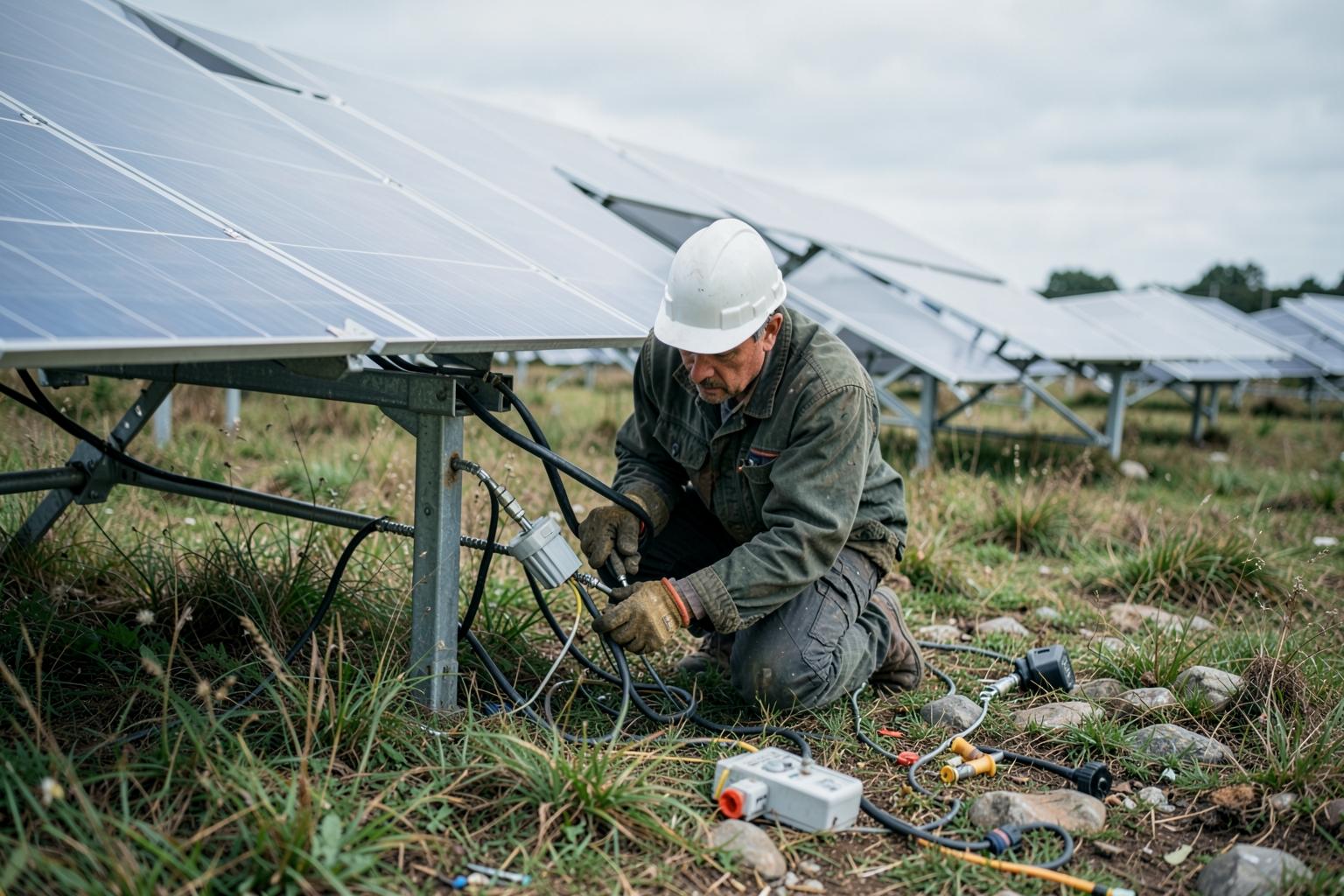
Keep the report open beside the proposal while working through the first two stages, since most of the useful questions come from putting those two side by side. Once a contract is in front of you, the question page is the place to send a clause you cannot read, with the sentence quoted in full. The two images show the moments most readers remember, the review of plans at the start and the wiring work that comes before switch-on. A plan on a table is only useful once it has been compared with the report's findings and the list of required fixes. The wiring work is where a missing finding becomes visible, so it is worth knowing which items the installer will look at first. Neither image stands in for a site visit, and neither should be read as a description of any particular installation.

Four places a decision stalls, and how to move it past them
A report that reads worse than the roof
Inspection wording can sound alarming without meaning the array cannot go on. Ask what each finding means for the place panels would sit, and whether it has to be fixed first or can be planned around. Get that answer in writing, with the item named.
A proposal that arrives before the report
A proposal written from a roof photograph alone can miss the structural or electrical item that changes the design. Hold it until the findings are in front of you, and compare the two line by line. Any item the proposal does not mention is a question to ask before signing.
A subscription read as a bargain
Community solar is a subscription with its own term, its own exit conditions and its own pricing rule. Read those terms the way you would read a lease, because the monthly figure is only one part of what you agree to. Check what happens to the subscription if you sell or move, and get that answer in writing.
Paperwork that finishes after the crew leaves
Switch-on depends on approvals that sit outside the installer's control. Ask who files each one, what they need from you, and when you should expect to hear back. A named person and a date for the next step are worth more than a general promise.
What this page counts, and what it leaves out
- 6stages in the sequence above
- 4stalling points named in this page
- 0fees, timelines or prices quoted on this page
Counted from this page's own text. No market data is used, because timelines and fees differ by state, utility and provider.
Once you hold the report and a first proposal, send the findings you cannot place through the question page, and name the stage you are in. A question tied to one stage is easier to answer well than one that asks about the whole process. Quote the finding, and say whether the proposal already addresses it. If it does, say where, so that a reply can deal with the proposal as written rather than with a general case. If the proposal says nothing about the finding, that silence is itself worth raising with the provider before any agreement is signed.