Field Notes: Reading the Roof Before the Panels Go On
, a note on rooftop solar and what an inspection finds first
Most solar conversations begin with the panels, their wattage, their brand and the number at the bottom of the proposal. We think the better place to begin is the surface the whole array will be bolted to. An inspector walks a roof with a different set of questions from a sales visit. Where will the weight go, what is the covering made of, and how much life does it still have before someone has to lift the racking to re-roof underneath it? Those answers decide whether a rooftop system is a sound decision, and they are visible long before any layout is drawn. A reader who asks them first will have a clearer view of whatever proposal follows.
Panels are the removable part of the job, and the roof is not. If the covering is near the end of its life, the cheapest moment to repair it is before the array goes on, because afterwards every repair means taking the panels off first. That is the point most easily skipped when a proposal arrives with a deadline attached. It is also a point a reader can check for themselves, using the inspection report they already hold. This note is written to slow that one step down and to show what it involves.
Start with the surface the array will be bolted to
Our reasoning for putting the roof first is simple. Every rooftop array is held by fixings driven into the roof structure, so the roof's condition is part of the array's condition for as long as the array stays up. A panel that fails can be unbolted and replaced without touching the building. A covering that leaks under a row of panels has to be reached from underneath, and that usually means the array comes off before the repair can start. A reader who understands that sequence can ask the right question before signing anything.
The roof is the one part of a solar job that has to last as long as the array does, and the only part you cannot simply swap out.
The checks at this stage are short. We look at the age and condition of the covering, the framing visible from the attic, any staining on the ceiling below the roof plane, and whether the roof has been patched in several places rather than replaced. None of those checks needs special equipment. Each one can be read in an inspection report if the inspector wrote it down clearly, and a report that says little about the roof is a reason to ask for more, not a reason to proceed. If your report flags any of them, put the question to us on the ask a question page, and we will say what it means for panels on that roof.
How large the shared option has grown
Community solar is the shared alternative, where subscribers take a share of an array that sits somewhere else instead of putting panels on their own roof. Research from the U.S. Department of Energy's Community Solar Market Trends page shows that about 7.87 GW of community solar was operating as of June 2024, across 44 states and localities including Washington, D.C. For a reader weighing a subscription, that is the market the fine print sits inside. The scale matters because a market that has grown this far has its own rules, contracts and providers, and those are what a reader will be asked to sign. Scale alone does not tell a reader whether a given offer is fair, though, so the figures are a starting point and nothing more.
- 7.87 GW
- of community solar operating as of June 2024, as the Department of Energy page reports it
- 44
- states and localities, including Washington, D.C., where community solar was operating as of June 2024
Those two figures describe the market as a whole. They say nothing about what a particular subscription will cost or return, and we would not use them to judge a single offer. A reader should check the terms in writing, and check them against the state's current program rather than against anything a provider says about it. Ask for the subscriber's share, the length of the agreement and what happens if the array is sold or moved, and get each answer in writing. Figures of this kind are useful for orientation, and they should never be mistaken for a promise about one agreement. If you already hold a subscription offer, the questions on the resources page are the place to start.
What an inspector walks through before panels go on
-
Covering and its remaining life
Look for lifted tiles, cracked shingles and worn granules on asphalt. Check whether the covering is a single layer or has been overlaid, because a second layer changes what the roof can carry. Ask how many years the covering is expected to last, and get that answer from the inspector. A roof near the end of its life is a repair to finish first.
-
Framing seen from the attic
Sagging rafters, earlier repairs and damp staining at the joists show how the structure has carried its load. Look for cut or notched members that were never meant for the job. The racking is fixed into those members, so the attic is part of the solar check. Ask the inspector whether the framing looks able to take the added weight, and treat an unclear answer as a reason for a structural opinion.
-
Shade and roof orientation
In the northern hemisphere a south-facing roof plane usually suits panels best. Shade matters across the seasons, though, so one sunny afternoon is weak evidence. Note any chimney, dormer or neighbouring tree the report mentions. Ask whether the shade falls on the proposed panels or only on the edge of the roof. A reader who keeps those notes can test any shading claim a provider makes.
-
Electrical panel and wiring age
The rating and condition of the service panel decide whether an added system can connect without upgrades. Scorched breakers, a panel the report marks as obsolete or defective, and old branch wiring are the items to ask about. These findings sit in the electrical part of the report rather than the roof part, and they are easy to miss. Ask the inspector to state the panel's condition in one sentence. Any upgrade that follows is a separate job, and it should be quoted separately.
Each of these four checks produces a line in the report that a reader can ask about. Read those lines again before a proposal arrives, and mark anything the inspector left unclear. Bring the report to the ask a question page with the item in question, and we will explain what the inspector was looking at. One clear item usually does more for a reader than a long list of general worries. Start with the line that the proposal seems to skip.
Rooftop and community arrays fail in different places
A rooftop array carries its weight on your building and answers to your roof. A community array sits on open ground or a warehouse roof, so the questions move to the access road, the fence line and the written terms. The two pictures show that difference: a flat commercial roof with its own rows of panels, and the cell surface every module is built from. Both are here to make a point about where to look, not to describe any project. A reader who knows where each kind of array tends to fail is better placed to ask the right question.
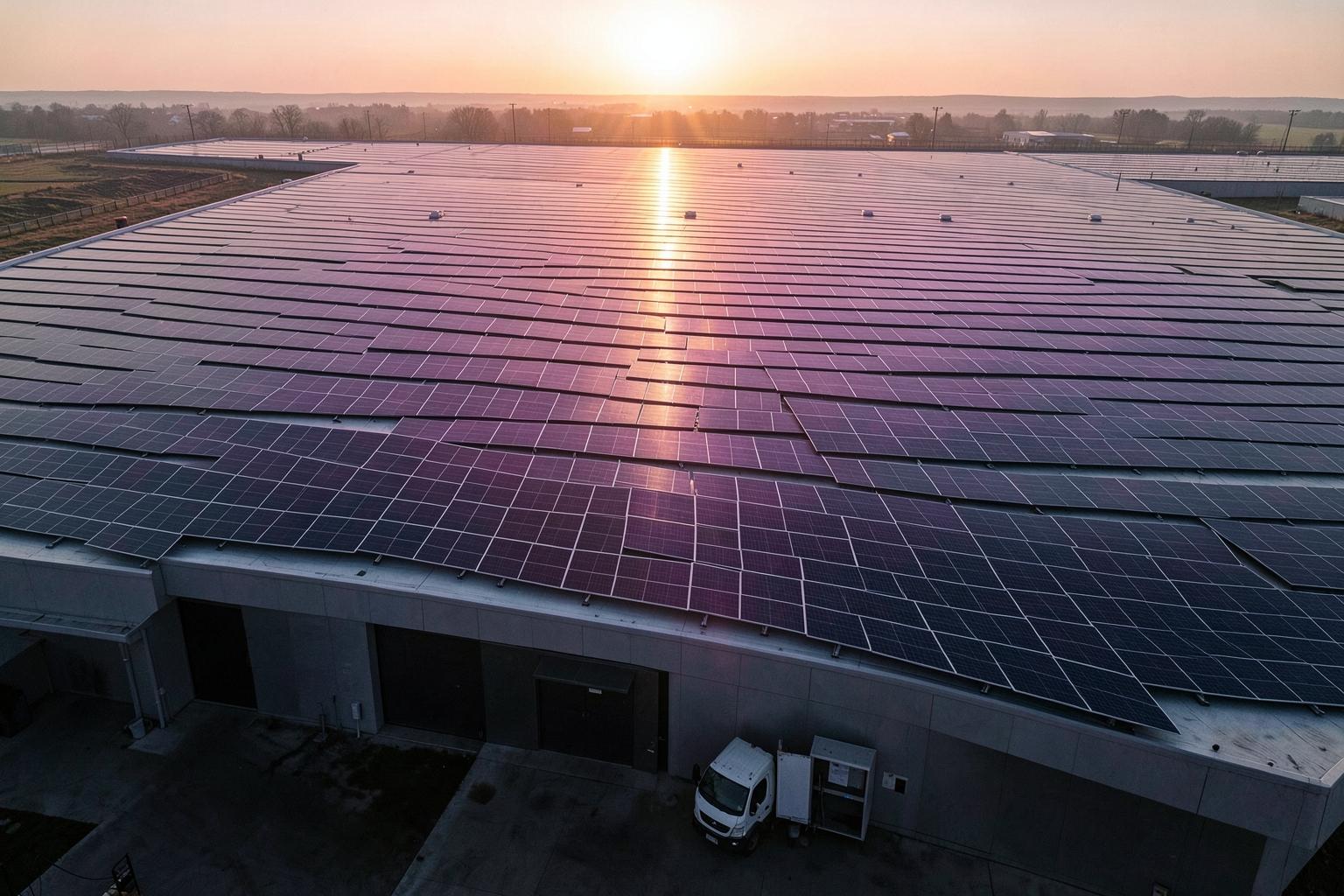

A reader choosing between the two should bring the inspection report, the roof photographs and a recent electricity bill to the ask a question page. Each document answers a different part of the decision. The report says what the building can take, the photographs show what the inspector could only describe in words, and the bill shows how much electricity is actually used. With all three in one message, a reply can address the real choice rather than a general one. Send what you have, and say which parts you do not have.
One house, worked through in a fixed order
Take a two-storey house whose report notes a covering in its last years, an older service panel, and a south-facing rear slope with a mature tree on the western boundary. The order of work follows from what the report says. First, the roof is repaired or replaced before any mounting plan is accepted, because the racking has to be fixed into it. Second, the panel is checked for capacity and condition, since an upgrade is a separate job with its own terms. Third, only then does the array layout enter the conversation, and the shade from the tree is judged across the seasons rather than on one day. Each step depends on the one before it, which is why the order matters more than any single item.
The one thing to keep from this note is the order. Read the roof and the panel before you read the array. A proposal that opens with the array has skipped the two items the array depends on, and that is the first thing to question. Ask the provider to walk through the roof and the panel in the same order as the report, and note where the answers stop. If your report reads like this house, send it to us through the ask a question page, and we will help you work out which item comes first.